


Wednesday, Nov 25, 2026 21:30 [IST]
Last Update: Tuesday, Nov 24, 2026 15:57 [IST]


NEW
DELHI, (IANS):
The seat-sharing talks within Bihar’s Mahagathbandhan ahead of the 2025
Assembly elections highlighted the changing balance of power within the
Opposition alliance.
While
the Congress remained an important partner in the INDIA bloc at the national
level, its position in Bihar was weaker. The RJD, led by Tejashwi Yadav, was
the dominant force in the alliance and held greater influence over seat-sharing
negotiations.
The
development was significant, especially when seen alongside the ongoing
seat-sharing talks for the 2027 Uttar Pradesh Assembly elections. In both
cases, the Congress appears to be negotiating from a position of weakness.
The
Samajwadi Party (SP), led by Akhilesh Yadav, appears perched in a position of
strength after outperforming the Congress in the state and emerging as the
principal force against the ruling Bharatiya Janata Party (BJP).
In
Bihar, the central dispute revolved around how many of the state’s 243 Assembly
seats the Congress should contest. It had contested 70 seats in the 2020
election and won only 19, and was thus seeking a share in 2025 that would allow
the party to rebuild its state unit and avoid being reduced to a symbolic ally.
But RJD
leaders repeatedly argued that the party’s demand exceeded its organisational
strength and electoral performance. That is an argument that finds echo again
in ongoing talks between the Congress and SP over the 403 Assembly seats in
Uttar Pradesh.
And at
the hustings last year, the RJD finally agreed to contest some 143 seats while
its principal ally settled for 61, significantly below the aspirations of many
state Congress leaders.
Smaller
partners, including Left parties and others, were also included, while others,
like the Jharkhand Mukti Morcha (JMM), stood ignored. In both instances, the
regional respective parties, being the larger partner in state politics, have
countered that seat allocation should be determined by strike rate and
winnability rather than historical status.
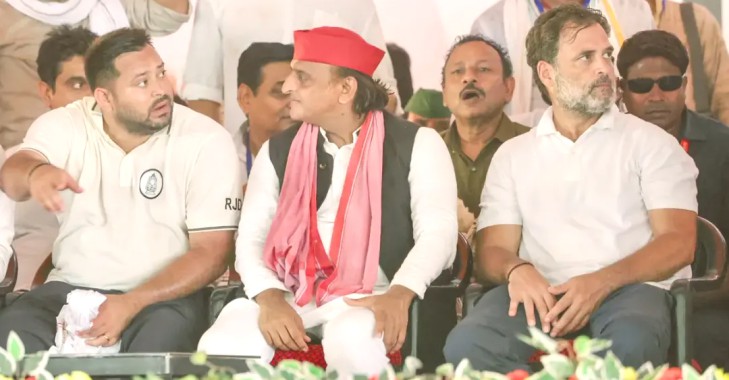
A key
question throughout the negotiations then – as it is now for Uttar Pradesh –
was whether talks would be driven directly by Rahul Gandhi and Tejashwi Yadav.
Bihar reports suggested that most formal negotiations were conducted through
designated representatives and party leaders rather than through the direct
involvement by the two principal faces of the alliance.
As,
incidentally, is happening now. But reports then did mention involvement of
Rahul Gandhi and Tejashwi Yadav as the ultimate political decision-makers whose
approval was necessary for any final settlement.
As is
likely to happen now. What makes the UP negotiations especially revealing is
the wide gap between Congress demands and the SP’s assessment of its electoral
worth. Recent reports indicate that Congress sought a triple-digit seat
allocation and even reportedly submitted lists running into well over 130
constituencies, while SP leaders emphasised winnability and reportedly offered
a much smaller share.
This
pattern points to a deeper political trend. Across the Hindi heartland,
Congress increasingly functions as a junior partner dependent on regional
parties for relevance. While in Bihar, it had to accommodate the RJD’s
dominance, in Uttar Pradesh, it negotiates with an SP leadership that sees
itself as the primary challenger to the BJP.
Through
time, the evolving situation marks a major shift that reflects the erosion of
Congress’s independent electoral base after decades of decline in the region.
The
party’s predicament is visible in the numbers. In Uttar Pradesh, Congress'
Assembly presence collapsed over successive elections, winning only two seats
in 2022 and polling a marginal vote share. That record is repeatedly being
cited by allies during negotiations.
In
Bihar, although Congress retains pockets of influence, allies continue to
question whether its organisational machinery justifies the seat share it
seeks.
With
upcoming elections, the challenge before the Congress leadership is about
proving to allies that it remains electorally relevant in states where regional
parties have replaced it as the principal Opposition force.
The
Bihar negotiations of 2025 and the Uttar Pradesh talks of 2027 demonstrate that
while Rahul Gandhi may be the national face of the Opposition, the Congress
increasingly enters state-level alliance talks as a claimant seeking relevance
rather than a dominant partner setting the terms.
