


Thursday, Oct 29, 2026 23:00 [IST]
Last Update: Wednesday, Oct 28, 2026 17:28 [IST]


GNATHANG
VALLEY, October 28: At the windswept heights of Gnathang Valley, where life
unfolds against the rugged backdrop of the Indo-China border, the yak is far
more than an animal. It is a source of livelihood, a carrier of tradition and
an enduring symbol of life in the Himalayas.
Bringing this
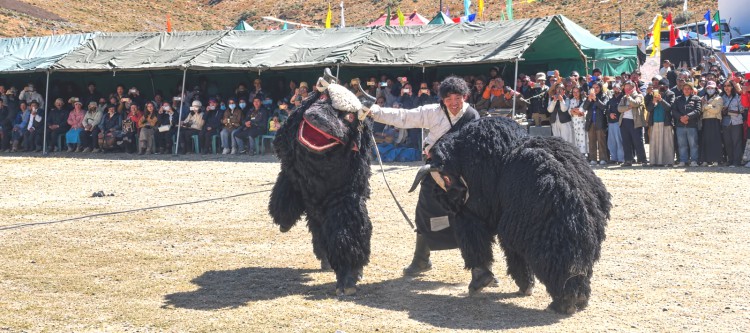
high-altitude heritage into focus, Sikkim hosted its first Yak Festival at
Gnathang Valley on Wednesday, turning the spotlight on the conservation of the
Himalayan animal and the future of communities whose lives and livelihoods are
closely tied to it.
Organised by
the State government’s Animal Husbandry and Veterinary Services Department, the
festival brought together yak herders, researchers, livestock experts,
conservation organisations and government representatives to explore how
traditional yak rearing can be preserved while opening new economic
opportunities for remote border villages.
The message
was clear: saving the yak also means sustaining the people who depend on it.
According to
estimates cited during the festival, Sikkim has a yak population of 5,312,
highlighting the importance of protecting the species and supporting the
pastoral communities that have kept the tradition alive across generations.
Speaker of the Sikkim Legislative Assembly M.N. Sherpa attended the event as chief guest. Puran Gurung, Minister for Animal Husbandry and Veterinary Services; Pamin Lepcha, MLA; Sandup Lepcha, Minister for Social Welfare; and MLA Erung Lepcha were among those present, along with departmental secretaries, officials and other dignitaries.
From
mountain pastures to market opportunities
For
generations, yaks have been indispensable to life in the high Himalayas.
Adapted to cold temperatures and rugged terrain, they provide milk, meat, fibre
and hides, while also serving as pack animals in areas where moving goods can
be a formidable challenge.
Yet,
preserving this traditional occupation in a changing economy requires more than
protecting the animal. Herders also need access to veterinary care, improved
livestock management, better processing facilities and markets that offer fair
returns for their products.
The festival
explored the potential of turning traditional resources into new sources of
income. Yak milk can be processed into butter, cheese and other dairy products,
while its fibre and hair can be used to make ropes, blankets, carpets, mats and
clothing. With improved processing, packaging and branding, these products
could find markets beyond the remote villages where they originate.
For herding
families, such opportunities could mean more reliable incomes and a stronger
incentive for younger generations to remain connected to their traditional
livelihoods.
The challenge
is to make yak rearing economically viable without losing the indigenous
knowledge and practices that have sustained it for centuries.
A Himalayan
meeting ground for conservation
The festival
also served as a platform for exchanging knowledge and experiences among
stakeholders involved in yak conservation, research, animal husbandry and
product development.
Participants
from Himalayan regions, including Arunachal Pradesh, as well as those from
outside India, added a wider dimension to the gathering. Exhibition stalls
showcased yak-rearing practices, conservation initiatives and products derived
from the animal, drawing the interest of local residents and tourists.
Beyond the
displays, the gathering highlighted challenges common to high-altitude pastoral
communities: harsh weather, difficult grazing terrain, animal health concerns
and the growing pressure to make traditional livelihoods financially
sustainable.
Collaboration
between herders, researchers, government departments and conservation
organisations could help identify practical solutions suited to the unique
conditions of Himalayan settlements.
Such
knowledge-sharing is particularly important in remote areas, where access to
services and markets can be limited by geography and weather.
Keeping
border villages vibrant
Gnathang
Valley’s location gave the festival a significance that extended beyond
livestock conservation. In Sikkim’s high-altitude border region, sustaining
livelihoods is closely linked to keeping communities and traditional
occupations alive.
Border
villages are not merely settlements on a map. They are living spaces shaped by
local culture, indigenous knowledge and the resilience of people who continue
to inhabit some of the Himalayas’ most challenging terrain.
Creating
viable livelihood opportunities can help strengthen these communities,
encourage local enterprise and reduce the economic pressures that threaten
traditional occupations.
For
yak-herding households, support for animal healthcare, product development,
market access and sustainable livestock management could make a tangible
difference. For the wider region, these efforts offer a way to link
conservation with community-led development.
The festival
placed this connection at the heart of its message: the future of the yak
cannot be separated from the future of the people who rear it.
Preserving
a Himalayan legacy
As the first
edition of the Yak Festival brought together conservationists, officials,
researchers and local communities, it offered a platform to reconsider the
economic and cultural value of an animal deeply woven into Himalayan life.
The task ahead
will be to translate these conversations into sustained support for herders,
stronger value chains for yak-based products and effective conservation
measures.
At Gnathang,
the yak emerged not simply as a symbol of the mountains, but as a reminder that
conservation works best when it protects both nature and the communities that
depend on it.
In a landscape
defined by altitude, isolation and resilience, keeping the yak tradition alive
could mean more than preserving an iconic Himalayan species. It could also help
secure the future of the villages that have made these mountains home.
