Tuesday, Oct 13, 2026 23:15 [IST]
Last Update: Monday, Oct 12, 2026 17:34 [IST]


From Bhutan to
Sikkim, Could History Open a New Door?
A degenerate age has little patience for waiting. Yet some forms of waiting transcend time, becoming, in their own way, a form of meditation. For the people of Sikkim, the prolonged absence of the Karmapafrom a land so closely bound to his lineage has been one such wait.
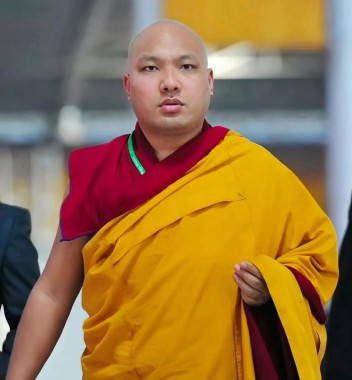
His Holiness
the 17th Gyalwang Karmapa, Ogyen Trinley Dorje,arrived in Dharamshala, Indiaon
5thJanuary 2000. Since then, devotees in Sikkim have followed his teachings
from afar, while their longing to receive him in person on Sikkimese soil
remains unfulfilled.
After 26 years,
one question naturally arises: Could the long vigil be approaching a moment of
possibility?
There is a remarkable
precedent.In 1959, after leaving Tibet, the 16th Gyalwang Karmapa, Rangjung
Rigpe Dorje, reached Bhutan. The Chogyal of Sikkim formally invited him to
establish his seat in Sikkim. Two months after entering Bhutan, the Karmapa
arrived in Gangtok and eventually chose Rumtek as his seatfrom among the sites proposed
by the Chogyal.That journey became a defining chapter in the history of the
Karma Kagyu lineage and Sikkim.
Today, history
offers an echo, although the circumstances are different.
With the 17thKarmapa
expected to be in Bhutan from 29th October to 7thNovember
2026 to consecrate the 108 ChangchubChorten Mindfulness Project, could this
create an opportunity for Sikkim? If circumstances and his schedule permit,
could the state once again formally request a visit?
A POSSIBILITY
BEYOND RUMTEK
The possibility
need not begin with Rumtek.This distinction matters.
In March 2018,
the Cabinet Committee on Security (CCS), headed by Prime Minister Narendra Modi,reportedly
permitted the 17th Karmapa to visit Sikkim while excluding Rumtek. A
‘Times of India’ report dated 31st March, 2018 stated that thedecision
came after a relay hunger strike by monks in Sikkim had crossed 630 days.
In an interview
published by the Karmapa’s Officethat year, he also explained that his ability
to visit Rumtek depended on resolving the legal dispute surrounding the
monastery, while the rest of Sikkim presented no such obstacle.
However, the Karmapa’s
subsequent travel to the United States for medical treatment and his acquisition
of citizenship of the Commonwealth of Dominicadelayed his visit to India.
For the newly
elected SKM Government, the developments of 2018 offered a precedent: the possibility
of exploring a visit to Sikkimsans Rumtek.
Chief Minister
Prem Singh Tamangand Ecclesiastical Affairs Minister Sonam Lama alsomade several
requests to the Union leaders, including Prime Minister Modi, Home Minister
Amit Shah, and Union Parliamentary Affairs Minister Kiren Rijiju. According to
media reports, thesemeetings were positive.
To strengthen these
initiatives, the state government had in 2022constituted a committee in 2022 under
the chairmanship of Ecclesiastical Affairs Minister and allocated Rs.1 crore to
facilitate the process, with provision for an annual allocation of up to Rs. 2
crore.
During the
2026-27 budget session on 22nd July 2026, Chief Minister Tamang
stated thatSikkim hadcompleted the construction of a dedicated monastery in Phodong
to serve as His Holiness’s residence in anticipation of his historic visit.
Against this
background, the Karmapa’s anticipated visit to Bhutan could provide an
opportunity for the Sikkim government to approach His Holiness and his office, coordinate
with the Government of India, and explore the possibility of a visit to Sikkim.
Rumtek’s
significance, meanwhile, remains beyond question. More than a monastery, it is
the sacred seat that the 16th Karmapa lovingly chose and built, embodying the
continuity of the lineage for generations of seekers.
WHEN LONGING BECOMES
A VOICE
The people of
Sikkim, includingKagyu monks and devotees, also have a role to play. They can express
their aspirations collectively, encourage the government’s efforts, and
cooperate in making a visit possible.
A collective
appeal, supported by online and offline initiatives under a banner such as “HameinApneKarmapa
Chahiye”or “We Need Our Karmapa”,could give expression to a hope that
thousands have carried quietly for years.
The memory of the
massivepeace rally held in Gangtok on 26thSeptember 2010 remains
vivid. Organised by the Karmapa Reception Committee and the Joint Action
Committee, the rally brought together thousands of devotees demanding that the
17th Karmapa be allowed to assume his seat at Rumtek. Media reports
described participation by monks from dozens of monasteries across Sikkim.
If that gathering
demonstrated the strength of the community’s aspiration, renewed efforts today
could build upon its legacy and help advance the search for a permanent solution.
There is another
dimension to this long wait—the mystery of merit and the meeting of Guru and
disciples.
In Tibetan
Buddhism, meeting an authentic Guru is not regarded as an ordinary encounter.
Such meetings are understood through the coming together of causes and
conditions—karma, merit and timing. Could this be the moment when that merit
begins to ripen? We cannot know.
THE MEANING OF
COMING HOME
For manypeople,
travelling to Bhutanin October-November, or journeying to Nepal or eventhe
United States, offers an opportunity to receive His Holiness’s darshan. But not
everyone can undertake such journeys as long-distancetravel remains beyond the
means of many families.
“I prefer to
wait for him in Sikkim rather than travel to Bhutan or Nepal,” shared Tshering
Doma, an elderly devoteewhose connection with the Karmapa dates back to the
time of the 16th Karmapa. For devotees like her, the Karmapa’s presence
in Sikkim would mean far more than an opportunity for an audience.
The longing to
see the Karmapa in Sikkim isultimately about continuity. It is about the
enduring bond with the Guru, his sacred seat and the people who have kept their
faith alive, year after year.