


Wednesday, Nov 18, 2026 21:30 [IST]
Last Update: Tuesday, Nov 17, 2026 15:53 [IST]


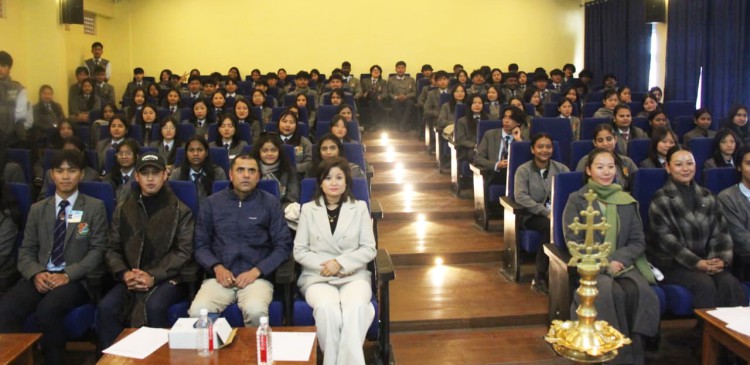
GANGTOK, : The Department of Geography, St. Joseph’s College, Darjeeling,
organised an academic talk on “Glacial Lake Outburst Flood (GLOF): Sikkim 2023”
today. The session was delivered by Dr. D. R. Dahal, Head of the Department of
Geography, Sikkim Government College, Namchi, a press release informs.
The
programme aimed to enhance students’ understanding of Glacial Lake Outburst
Floods, their causes, consequences and growing vulnerability in the Himalayan
region. It also sought to familiarise students with modern techniques used in
environmental monitoring, surveying and disaster risk assessment.
During
the session, Dr. Dahal discussed the geographical and environmental factors
associated with the 2023 Sikkim GLOF disaster, highlighting its impacts and the
increasing vulnerability of the Himalayan mountain environment. He also
elaborated on the application of Remote Sensing, Geographic Information Systems
(GIS), Satellite Imagery and GPS-based Surveys in mapping glacial lakes,
monitoring changes in their size, identifying vulnerable locations and
assessing potential flood risks.
The
talk further highlighted the fragile ecological conditions of the Eastern Himalayas,
where rising temperatures, glacial retreat and changing environmental
conditions are creating new challenges for mountain communities. The discussion
emphasised the importance of scientific monitoring, field investigations and
technological advancements in understanding and managing climate-induced
hazards in the region.
The
programme was attended by students and faculty members of the Department of
Geography. It provided an important academic platform for connecting
theoretical geographical knowledge with contemporary research and practical
applications.
The
session offered students valuable insights into Himalayan Geomorphology,
Climate Change, Glacial Hazards and Disaster Risk Reduction, while highlighting
the importance of scientific approaches to understanding and addressing
emerging environmental challenges in the Himalayan region, the release
mentions.
