


Friday, Mar 27, 2026 23:15 [IST]
Last Update: Thursday, Mar 26, 2026 17:36 [IST]


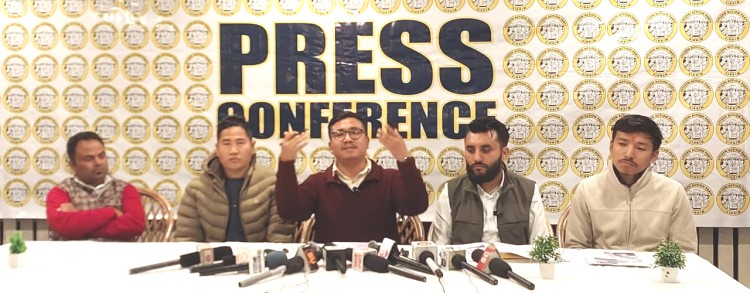
GANGTOK,: The Citizen Action Party (CAP) Sikkim on Thursday announced that it
will boycott the upcoming Urban Local Body (ULB) elections in Sikkim, scheduled
for April 24, while extending support to ‘qualified and capable’ independent
candidates across all 63 wards.
Addressing
a press conference in Gangtok, CAP spokesperson Albert Gurung said that the
decision was taken in protest against the ruling Sikkim Krantikari Morcha’s
(SKM) move to conduct the municipal elections on a partisan basis, which he
termed a ‘betrayal’ of SKM’s 2019 manifesto promise.
“A
few days ago, the State Election Commission announced that the municipal
panchayat and municipality elections are scheduled for April 24. This time,
more than 10 wards have been added in the municipal panchayat list, making it a
total of 63 wards. As a responsible political party, we declare that we reject
this partisan ULB election. We will not field party candidates. However, to
keep democracy alive and challenge favouritism, we will support qualified,
capable and educated independent candidates,” said Albert.
Criticizing
the SKM government, CAP Sikkim accused the ruling front of going back to its
pre-2019 promise to hold panchayat and municipal elections on a non-party
basis.
Quoting
from the SKM manifesto, Gurung said the party had earlier opposed partisan
local elections, claiming they turned grassroots institutions into “puppets.”
“However,
the current move to field party candidates in all wards reflects a “complete
U-turn”. The Sikkimese people gave them power based on that promise. Now they
have reversed their stand, which is completely wrong. If partisan elections are
right, why did they oppose it earlier?” the CAP Sikkim spokesperson questioned.
The
party further alleged that SKM is attempting to impose candidates and maintain
political control over local bodies by leveraging State power.
CAP
spokesperson Prakash Parajuli highlighted that local self-government
institutions derive their mandate from the 73rd and 74th Constitutional
Amendment Acts of 1992, which emphasize decentralization and grassroots
democracy.
He
argued that in a small State like Sikkim, where wards have between 500 to 1,000
voters, independent elections are more suitable to ensure direct public
participation.
“In
earlier independent elections, especially in 2021 and 2022, Sikkim witnessed
the highest voter turnout and participation of educated youth. Independent
elections create space for capable individuals from the public,” he added.
CAP Sikkim
also pointed to pressing issues in urban areas, particularly in Gangtok,
including water shortages, parking constraints, rising taxes, garbage fees, and
electricity bills.
Referring
to recent water scarcity, Albert said, “People in Gangtok had to go 7 to 10
days without drinking water despite having elected representatives. These are
the issues that need capable and accountable leadership at the local level.”
CAP Sikkim
urged voters across Gangtok Municipal Corporation, Namchi Municipal Council,
and Nagar Panchayats of Nayabazaar-Jorethang, Singtam, Mangan, Geyzing,
Pakyong, Soreng, and Rangpo to support independent candidates who are committed
to public service.
“We
welcome all qualified candidates who want to bring change in their wards,
towns, and markets. In democracy, if only the ruling party dominates, it
weakens local governance,” CAP said.
The
elections, announced by the State Election Commission, will be held across 63
wards, including newly added areas in Pakyong and Soreng districts.
